
A NUHA initiative: Nordic experts unite to solve the hardest rare disease cases
At Karolinska University Hospital, clinical geneticists and data specialists from across the Nordic region spent two days working side by side on rare disease cases that had stumped doctors for years. One of those cases may turn out to be something nobody has described before.
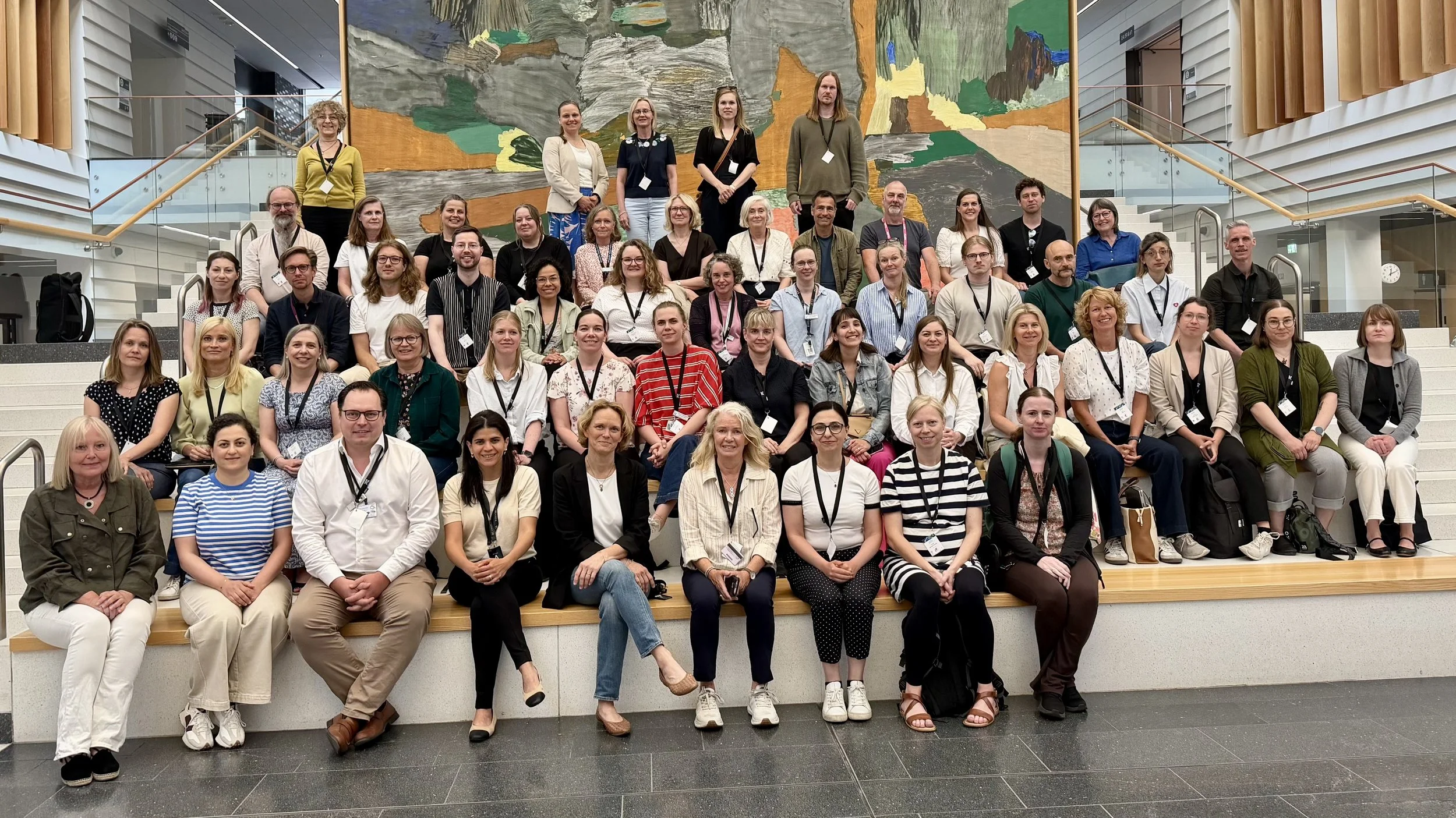
Photo: Karolinska University Hospital.
For two days in June, a group of clinical geneticists, data scientists and laboratory specialists from across the Nordic region sat down together at Karolinska University Hospital with one goal: solving cases that nobody had been able to solve alone.
The event, the first NUHA Clinomics workshop organized under the Nordic University Hospital Alliance (NUHA), brought together 57 experts from Sweden, Denmark, Norway, Finland and Iceland to work through ten of the hardest rare disease cases from across the region. Patients and families had given their consent in advance, knowing there was no guarantee of an answer.
By the end of the two days, one case stood out.
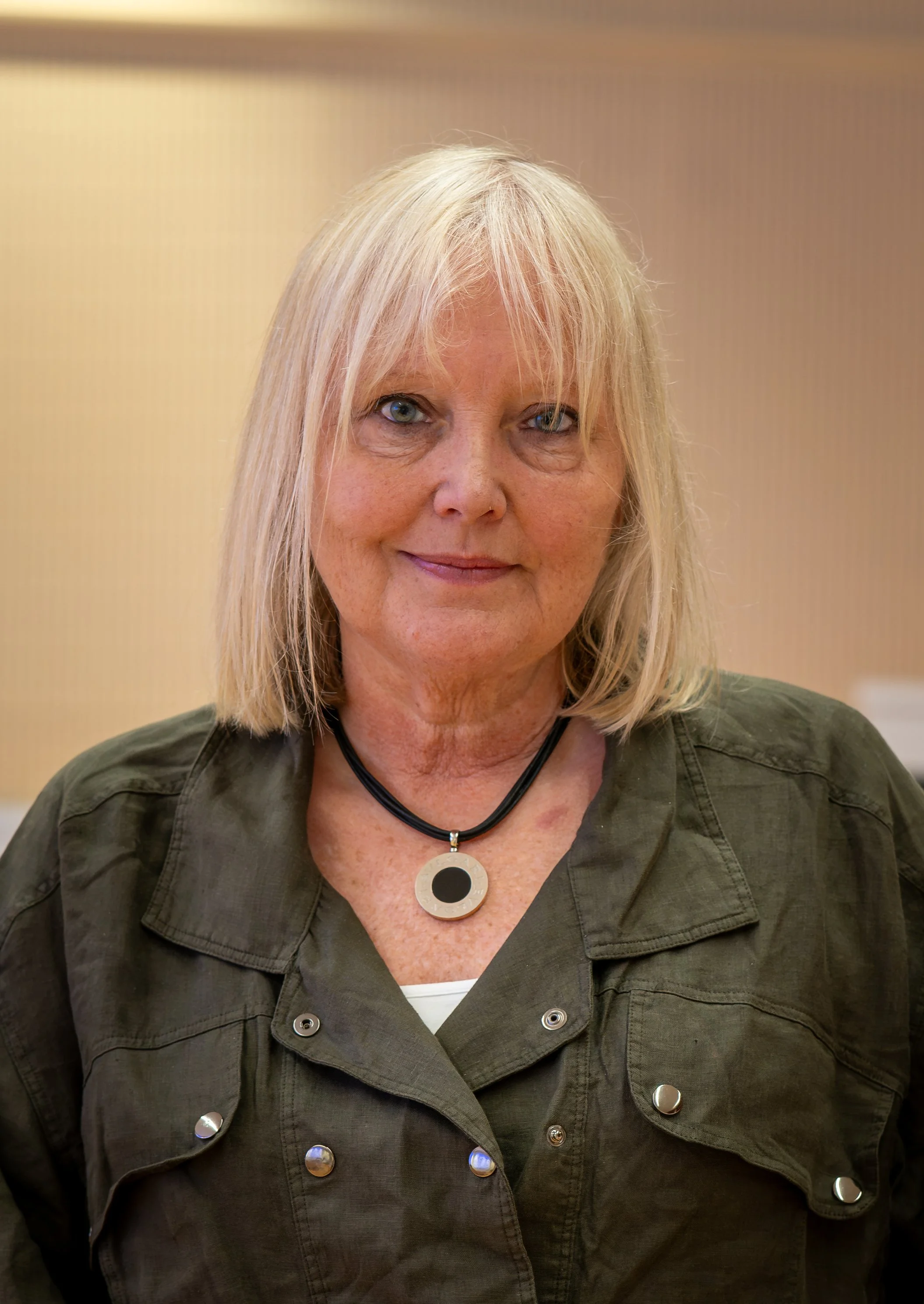
Ann Nordgren, senior physician and professor in clinical genetics and director for Karolinska's Centre for Rare Diseases (CSD), Karolinska University Hospital.
"We've been working on a case where we actually feel quite confident, two groups arrived independently at the same conclusion, that this could be an entirely new disease," says Ann Nordgren, senior physician and professor in clinical genetics, who recently took on the role of director for Karolinska's Centre for Rare Diseases (CSD).
"We've found a candidate gene that could fit with the disease. We still need follow-up studies, but what we have so far is very strong”, she says.
The case for working together
Rare diseases are, almost by definition, a numbers problem. Any single country may only see a handful of cases of a given condition in a given year, which makes it hard for any one hospital or one country to build up enough experience to recognize a pattern.
"There are sometimes only a handful of cases in Sweden," Nordgren explains.
"That's also why Europe has built up the European Reference Networks (ERN). If we look at the Nordic region specifically, we already have well developed diagnostics and our own national registries, which can be combined with genomic data. We have very good conditions here to learn more, gather patients and build knowledge together”, she says.
NUHA was founded to make this type of cooperation easier to act on, not just easier to talk about. Rare diseases is one of areas the alliance has identified as having the greatest potential for impact across its member hospitals, alongside benchmarking, future health, platform trials and NUHA@Home.
For Nordgren, the timing made sense.
"There's been a long tradition of Nordic collaboration around rare diagnoses. With NUHA, this was a real opportunity to get something practical going quickly, something that we could take on in a simple way. We can develop diagnostics together, and we can also strengthen collaboration in other ways”, she says.
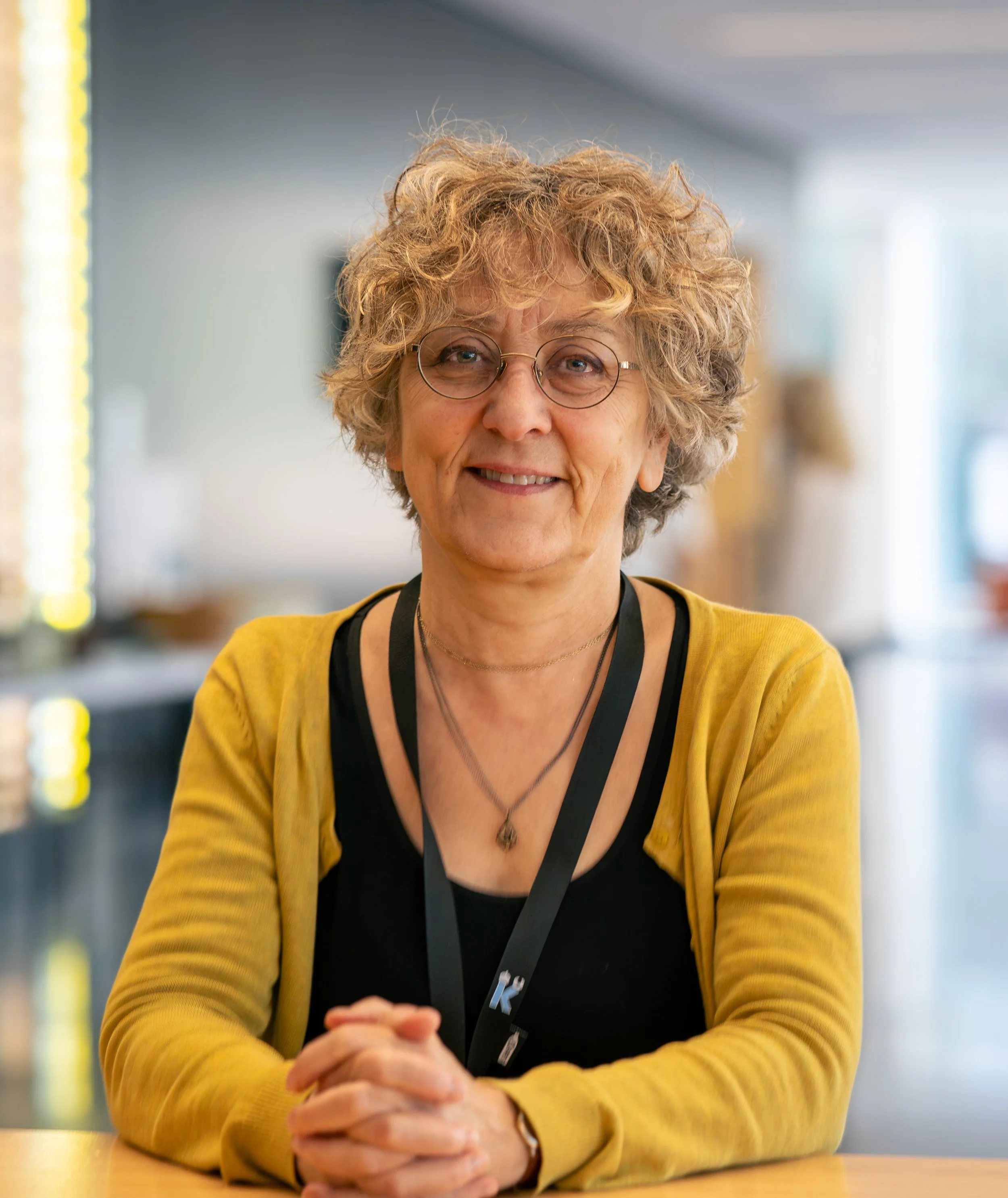
Zeynep Tümer, Prof. MD, PhD, DMSc, Rigshospitalet.
Working side by side
For the people in the room, the value of the workshop went beyond any single case.
Zeynep Tümer, Prof. MD, PhD, DMSc from Denmark, has worked on undiagnosed disease cases for many years and has been involved since the first Undiagnosed Hackathon in 2023, organized by Prof. Nordgren in collaboration with the Wilhelm Foundation at Karolinska Institute, also in a multidisciplinary setting combining clinical, molecular, genetic, and bioinformatics expertise. This year, she helped plan the "Clinomics" event from the Danish side, and knows firsthand what happens when a case can't be solved on the spot.
One case that stayed with Tümer involved a young girl, around five or six years old, with several congenital anomalies affecting her eyes, her walking, her skeletal system, her muscles, and her hearing.
”I wanted to find a diagnosis for this girl," Tümer says. "Unfortunately, even after many hours and many people looking at which genes could explain these features, it wasn't possible to reach a definite answer."
Not every case gets solved, and the people running these workshops don't expect them to be. Out of the ten cases worked on this year, organizers estimated that around two would likely be solved outright, a 20 percent success rate that, while it might sound modest, compares to what's typical even with full genome sequencing.
"Normally, genome sequencing has a success rate of around 40 percent, so 60 percent are still left undiagnosed”, says Tümer.
But Tümer is quick to point out that an unsolved case isn't a dead end.
"During this workshop, I have learned some new tools I can use in my own work going forward. And for some patients, we keep working after the event ends. For this girl, we have some possible clues we can take back and share with the clinicians.”
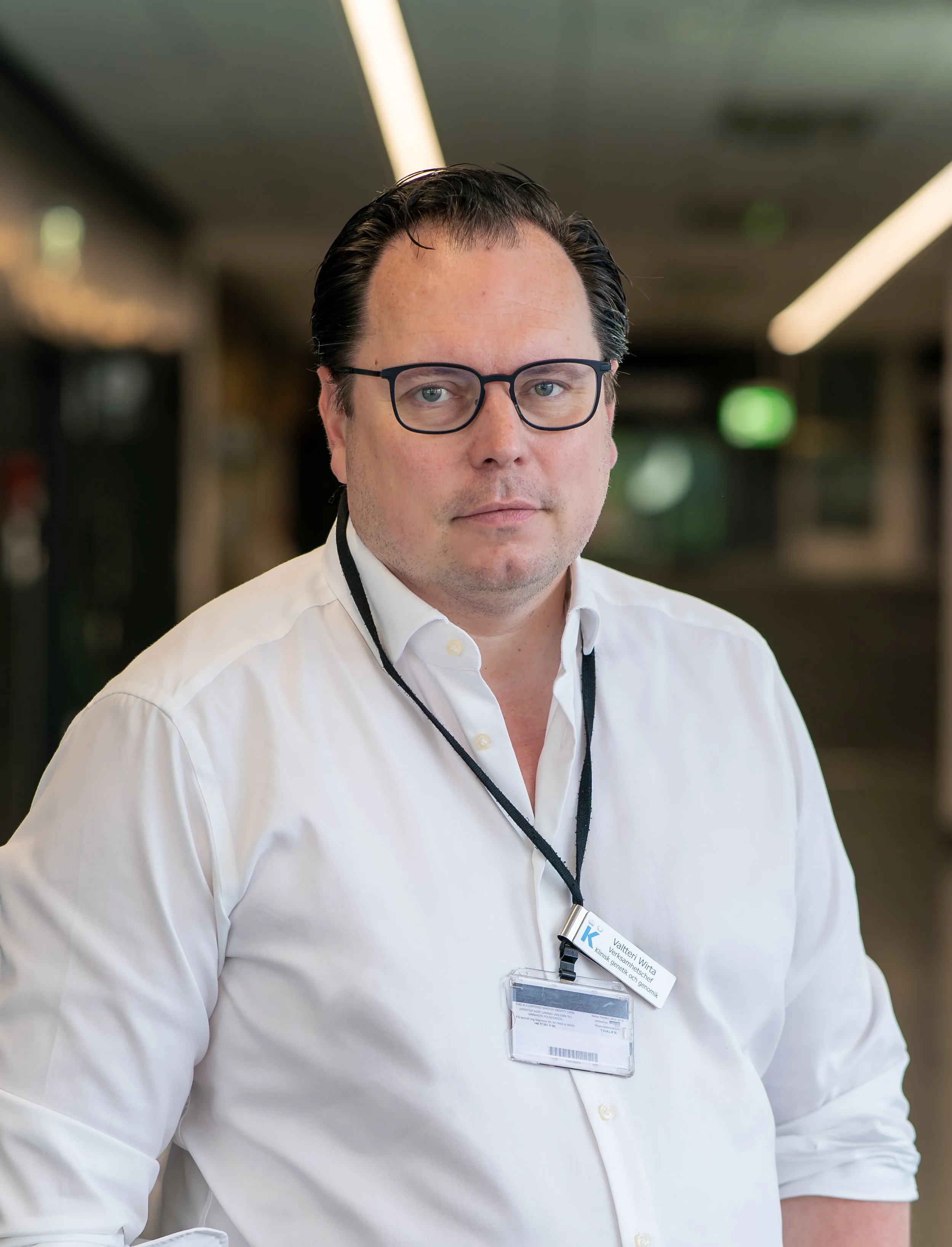
Valtteri Wirta, Head of Clinical Genetics and Genomics, and Director of Karolinska's Genomics Center (GMCK), Karolinska University Hospital.
The benefit nobody puts in a report
Asking the people who organized this event what the real benefit is, the answer isn't only about the cases.
Valtteri Wirta, Head of Clinical Genetics and Genomics, and Director of Karolinska's Genomics Center (GMCK), who represents Karolinska in NUHA's rare disease working group and helped organize this year's workshop, says the value runs in both directions, into the cases themselves, and into how each hospital works once everyone goes home.
"The purpose of these events is really to solve unsolved cases. That's the primary goal on paper; everyone comes in with two patient cases. But underneath that, the most important thing is that we get to know our Nordic colleagues. We understand how they work, and we can find good models, good processes, that we can take, adapt and bring back into our own work. It's a knowledge exchange between clinical genetics labs across the Nordic region,” says Wirta.
He continues:
“That exchange, changes how people think, not just what they know. You work your own way locally, you're trained in your own process, and you follow it. That doesn't always mean it's the best way to solve a particular problem. By being exposed to how others think, what tools they use, how they reason through a case, we learn an enormous amount. I think that's probably the biggest positive effect for everyone."
Mari Ann Kulseth, who has worked in clinical genetic interpretation in Oslo for fifteen years, going back to the era of Sanger sequencing, put it more simply: the job usually happens alone.
"We sit very often on our own when we do this work, coming up with all the ideas ourselves. It's clearly better to sit together and bounce ideas off each other”, she says.
For Kulseth, this year's workshop also offered a glimpse of where the science itself is heading.
"What fascinates me a lot is that I've always believed there are many mutations or variants affecting RNA that we simply haven't been able to see, we haven't caught them yet. Now we're starting to see that the focus is shifting toward RNA. That's been one of the genuinely fun parts of being here."
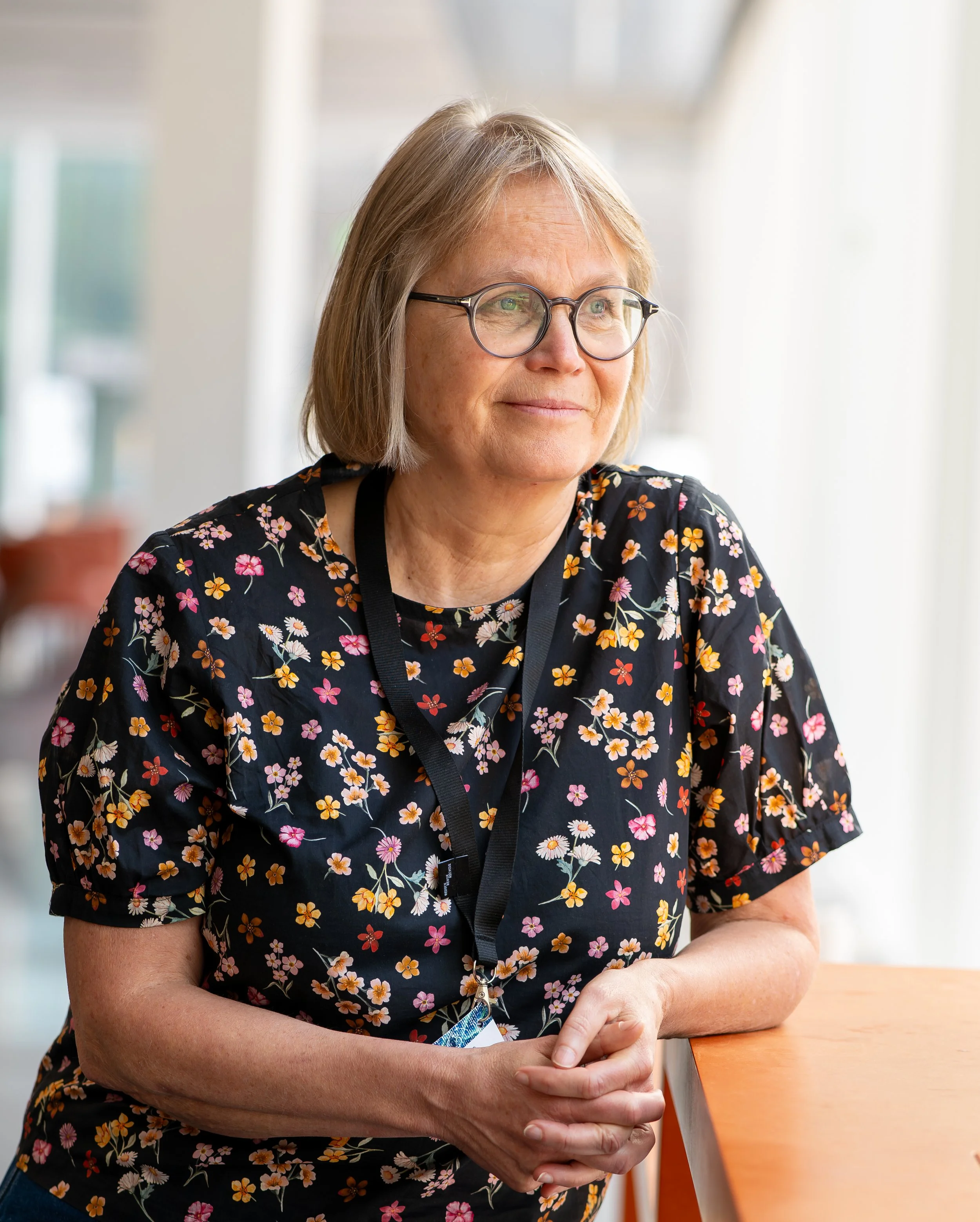
Mari Ann Kulseth, PhD and CLG, Oslo University Hospital.
Where the real challenge lies
If there's a common thread running through all four conversations, it's this: the science is, in some ways, the easy part. The real challenge is everything around it, especially data sharing across national lines.
"It would save money, and it would make diagnosis much faster, because we share a population with common genetic variants that could be used in shared variant and clinical databases. This should be centralized across the Nordic countries,” says Tümer.
Wirta agrees, and points to where the real work needs to happen next.
"One of the things we already know we want to work on is making data sharing possible between our Nordic hospitals. It's a legally complex question, especially once we move outside the scope patients have specifically consented to. Sharing data with other care providers isn't simple, and that's where I think we'll need the weight of the hospitals themselves to find a legal solution that makes this possible. We can build the technical side ourselves. It's the legal side that's hard."
Kulseth, hears the same conversation.
"Privacy protections and everything around them stand a little in our way," she says, before adding what she'd want instead:
"We need to find collaboration that is as concrete as possible, not just words and visions, but something real. We sit here and work directly with patient cases, and I think that's the best way forward, rather than writing endless documents about visions.”
Looking ahead
Nordgren is already thinking about what this becomes over time. The Nordic countries together represent roughly 27 million people, a population large enough, she argues, to meaningfully change what's possible for patients with rare diseases if the five countries keep working this closely together.
"Together we can become strong enough to offer clinical trials, therapies and treatments to this patient group," she says.
She continues:
"A few years ago, we were talking about treatment rates around 6 percent of rare genetic diseases — now, it is up to 16 percent. It's moving forward incredibly fast, and if we can stay at the forefront of this together, it would be good for Sweden, for life science, and most of all, for our patients."
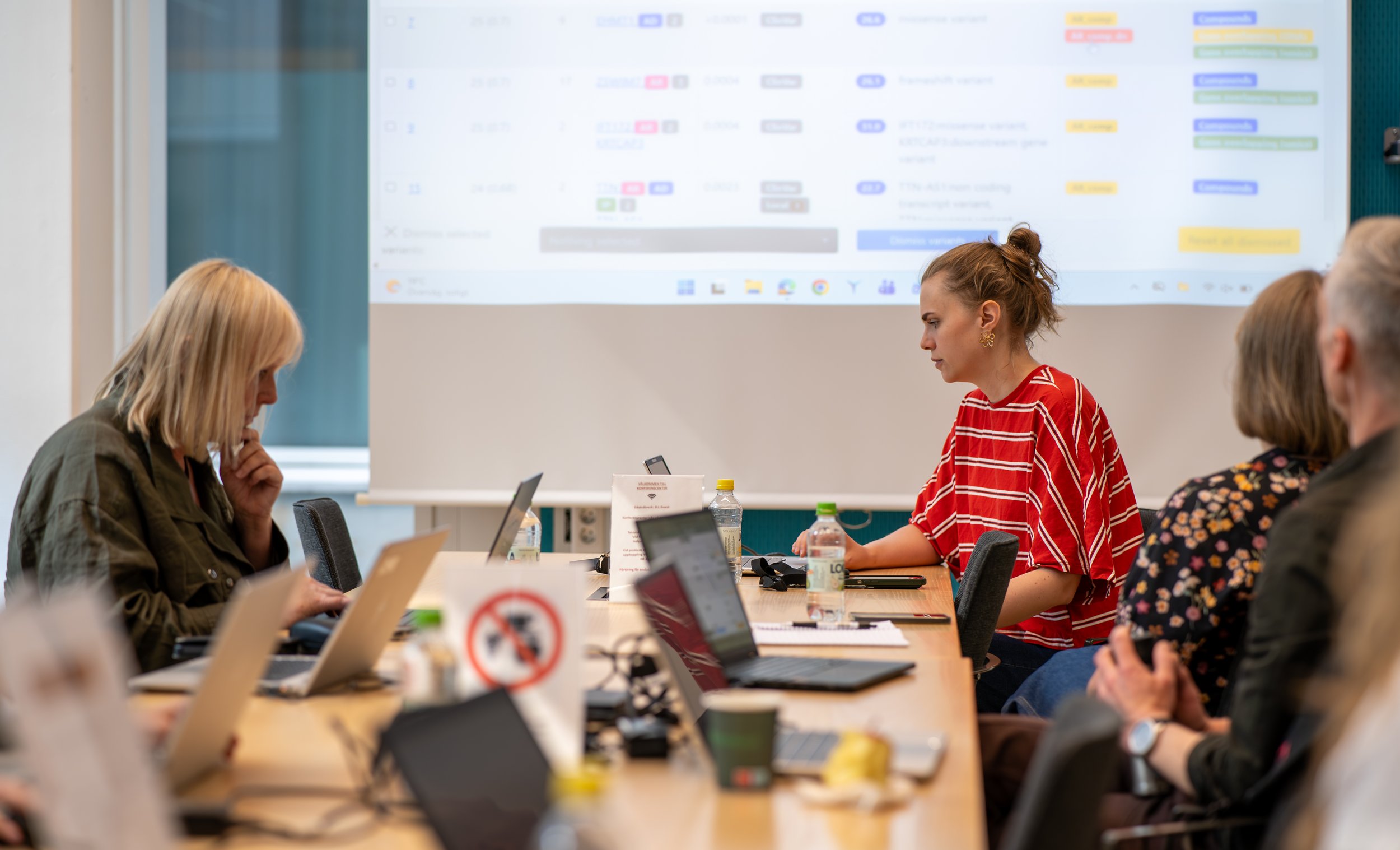
Of the ten cases that came into the room, one or two may leave it with an answer. That is the part that can be measured. What is harder to measure, but just as real, is everything else that happened along the way: clinicians from five countries learning how their neighbors think, comparing tools, and walking away with new leads for the cases that are still unsolved.
That, in the end, is what NUHA is built on, the idea that healthcare's hardest problems get smaller when more people are willing to look at them together.
___________________________
Text and photo: Fredric Möller Eklund